






Roof shingle problems are among the most urgent exterior issues a homeowner can face. Among the easiest to miss until water damage is already underway. Whether you’ve spotted curling roof shingles pulling away at the edges, noticed missing roof shingles after a storm. Discovered cracked roof shingles that are letting moisture through. You’re simply trying to figure out whether your roof needs a quick roof shingle repair or a full replacement. This guide covers everything you need to know. We’ll walk through every major type of damaged roof shingles, explain what causes each problem. While helping you decide when to act and when to call a professional before a issue becomes a costly leak.
Why Roof Shingle Problems Demand Quick Action
In geo-location, Shingles are the first and most important line of defense your roof has against rain, wind, and temperature swings. When even a small section of damaged roof shingles goes unaddressed. Water finds its way underneath, and works its way toward the interior of your home. By the time you see a water stain on the ceiling, the damage has been progressing for weeks or months. Roof shingle problems that cost a few hundred dollars to fix in early stages. Which can escalate into replacement, insulation damage, and mold remediation that runs into thousands.
The key is catching the signs early. Knowing what each type of shingle problem means for your roof’s overall health.
Curling Roof Shingles: Causes and What to Do
Curling roof shingles are one of the most visible and telling signs of a roof that is aging. There are two distinct types of curling, and each points to a different root cause.
Cupping vs. clawing
Cupping occurs when the edges of damaged roof shingles like a shingle turn upward, forming a cup shape across the surface. This is almost always caused by moisture imbalance. The underside of the shingle absorbs more moisture than the top surface, causing it to warp. Clawing is the opposite: the edges lie flat but the middle of the shingle lifts, forming an arch. Clawing typically indicates the shingle is drying out and losing its flexibility with age.
Both forms of curling roof shingles leave gaps. Where wind and rain can get under the shingle and reach the decking below. Buckling shingles, a related problem where shingles ripple in a wavy line. Are often caused by movement in the roof deck beneath them, typically from moisture in the decking or improper installation.
What causes curling roof shingles
- Poor attic ventilation. Heat and moisture trapped in the attic bake the shingles from below, causing them to dry out unevenly and curl. This is the leading cause of premature curling roof shingles and is entirely preventable with proper soffit and ridge ventilation.
- Age. Asphalt shingles begin to curl naturally in the final years of their lifespan and become damaged roof shingles. Curling across a large portion of the roof is a clear signal that a full replacement is approaching.
- Improper installation. Shingles nailed too high, without enough overlap, or without proper starter strips are more prone to curling and buckling shingles early in their life.
- Moisture in the decking. If the roof deck itself has absorbed moisture, it can cause the shingles above it to warp and curl as the deck moves with seasonal temperature changes.
If curling roof shingles are isolated to one section of the roof, a targeted roof shingle repair is needed. If curling is widespread, it typically signals that the entire roof is nearing the end of its service life.
Missing Roof Shingles: Causes and Urgency
Missing roof shingles are a roof emergency like damaged roof shingles. Unlike curling or cracking — which degrade the shingle’s protective ability gradually — missing roof shingles leave the decking completely exposed. Every hour of rain that falls on bare decking is an hour of direct water infiltration into your home’s structure.
What causes missing roof shingles
- Wind damage. High winds are the most common cause of blown off shingles. Shingles that were already curling, cracking, or improperly sealed are the first to lift in a storm. Even moderate wind speeds can remove shingles that are at the end of their useful life.
- Failed sealant strips. Modern shingles have self-sealing adhesive strips on their undersides that bond adjacent shingles together. When these strips fail — due to age, improper installation, or extreme cold during installation — shingles are held in place only by their nails and can lift and blow off in wind that wouldn’t affect a properly bonded roof.
- Ice dam damage. In colder climates, ice dams force water under shingles and can lift or displace them entirely as ice expands and contracts. Missing roof shingles along the eaves in winter are a common result.
- Foot traffic and impact. Walking on the roof improperly, falling tree limbs, and hail impacts can all dislodge or break shingles free from their nailing points.
What to do about missing roof shingles
Any area of damaged roof shingles and missing roof shingles should be addressed within 24 to 48 hours if at all possible. If a professional cannot respond immediately, a temporary tarp secured over the exposed area will prevent water intrusion until roof shingle repair can be completed. Do not attempt to walk on a wet or steep roof. The risk of injury is severe. The repair cost of doing it yourself incorrectly often exceeds what a professional would have charged.
Missing roof shingles after a storm may be covered by your homeowner’s insurance policy. Document the damage with photographs. Before any repairs are made and contact your insurer before scheduling service if coverage is possible.
Cracked Roof Shingles: Causes and Repair Options
Cracked roof shingles are less visually dramatic than missing shingles but are equally serious as a water intrusion risk. A crack in a shingle — even a hairline fracture — creates a direct pathway for water to reach the decking below. Broken shingles on roof sections that face prevailing wind or receive heavy rainfall are especially vulnerable to accelerated water damage through cracks.
What causes cracked roof shingles
- Thermal cycling. Shingles expand in heat and contract in cold. Years of repeated thermal cycling cause the asphalt to become brittle, and cracks develop — first as fine lines, then as full splits across the shingle surface.
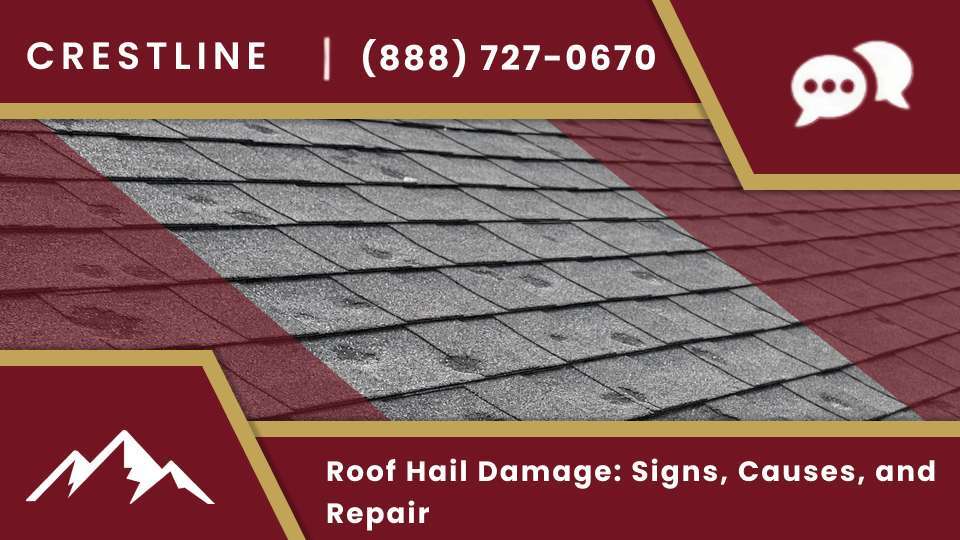
- Hail impact. Hail is one of the most destructive causes of cracked roof shingles. Impact cracks from hail are not always visible from the ground but can be identified by the characteristic star-shaped fracture pattern and bruised granule loss around the impact point.
- Low-quality or aging shingles. Budget shingles with lower fiberglass mat content crack sooner than premium products. Any shingle past its rated lifespan becomes increasingly brittle and prone to cracking with seasonal temperature changes.
- Tree branch impact. Falling limbs create impact cracks and can also remove granules, exposing the asphalt beneath to UV degradation that accelerates further cracking.
Roof shingle repair for cracked shingles
Isolated cracked roof shingles — especially on a younger roof — can often be addressed with a targeted roof shingle repair rather than a full section replacement. A roofing technician can replace damaged shingles individually when the surrounding shingles are still in good condition and the decking beneath is sound. However, when cracked shingles are widespread, or when the decking shows signs of moisture damage beneath them, a broader repair or replacement becomes necessary. Attempting to seal broken shingles on roof sections with roofing caulk is a temporary measure only — it will not hold through a full seasonal cycle.
Other Common Roof Shingle Problems
Granule loss
Asphalt shingles are coated with mineral granules that protect the underlying asphalt from UV radiation. As shingles age, granules loosen and wash into gutters. Heavy granule loss — visible as bare, shiny patches on the shingle surface or large accumulations of dark grit in gutters — is a sign that the shingle’s protective coating is depleted. Once granules are gone, the exposed asphalt degrades rapidly. Granule loss is often the first visible sign of roof shingle problems on a roof approaching the end of its lifespan.
Algae and moss staining
Dark streaks running down a roof are almost always algae growth — specifically Gloeocapsa magma, a blue-green algae that feeds on the limestone filler in asphalt shingles. While algae staining is primarily cosmetic in early stages, it traps moisture against the shingle surface and accelerates granule loss over time. Moss growth is more structurally damaging — moss roots work under shingle edges and lift them, creating the same vulnerability as curling roof shingles. Both can be treated with zinc or copper strip installation at the ridge, or with targeted cleaning solutions applied by a roofing professional.
Blistering
Blistering appears as small raised bubbles on the shingle surface, caused by moisture or volatile gases trapped in the shingle during manufacturing or installation. When blisters pop — either from heat or foot traffic — they create open pockets on the shingle surface that collect water and accelerate deterioration. Blistering across a large area often indicates a manufacturing defect and may be covered under the shingle manufacturer’s warranty.
Roof Shingle Repair vs. Full Replacement: How to Decide
The decision between roof shingle repair and full replacement comes down to three factors: the age of the roof, the extent of the damage, and the condition of the decking beneath.
- Repair is appropriate when damaged roof shingles are isolated to a small section, the roof is less than 15 years old, and the surrounding shingles and decking are in sound condition.
- Replacement is appropriate when curling roof shingles, missing roof shingles, or cracked roof shingles affect more than 25–30% of the roof surface, when the roof is within five years of its rated lifespan, or when the decking shows widespread moisture damage.
- A professional inspection is always the right starting point. Roof shingle problems are not reliably assessed from the ground. A qualified roofer can identify hidden damage, check decking integrity, and give you an honest assessment of whether repair or replacement delivers better long-term value.
Many roofing contractors offer free or low-cost inspection visits. Scheduling an annual inspection — especially after storm season — is the most cost-effective way to catch roof shingle problems before they become structural issues.
Address Roof Shingle Problems Before They Become Roof Emergencies
Roof shingle problems rarely resolve themselves. Curling roof shingles curl further. Missing roof shingles leave decking exposed longer. Cracked roof shingles let in more water with every rainfall. The longer damaged roof shingles go unaddressed, the more the damage compounds — and the further the repair cost climbs. Whether you need a targeted roof shingle repair on a few blown off shingles or a full inspection to assess widespread deterioration, acting early is always the right call.
Crestline Home is ready to help you assess your roof’s condition and develop a repair plan that fits your timeline and budget. Contact us today to schedule an inspection and protect your home from the top down.
Phone: (888) 727-0670
Email: info@crestln.com
Website: https://www.crestln.com/
