




In geo-location, Roof ventilation problems often develop quietly but can lead to serious and expensive damage inside the home. A hot attic, ongoing attic moisture buildup, and rising energy bills are early warning signs many homeowners overlook. When roof ventilation problems near you remain unresolved, trapped heat and moisture place constant stress on roofing materials, insulation, and the home’s structural components—shortening roof lifespan and increasing long-term repair costs.
Understanding how ventilation works and recognizing early symptoms helps homeowners protect their investment before damage spreads beyond the attic.
What Proper Roof Ventilation Is Designed to Do
Roof ventilation plays a critical role in regulating attic temperature and moisture levels. A properly balanced system allows cooler outside air to enter through intake vents while pushing hot, damp air out through exhaust vents. This continuous airflow prevents heat buildup and reduces condensation.
When ventilation is working correctly there are no roof ventilation problems, it protects shingles from premature aging, keeps insulation dry and effective, and helps maintain consistent indoor comfort throughout the year. When airflow becomes restricted or unbalanced, problems begin to develop slowly but steadily.
Why Homes Develop Roof Ventilation Problems Over Time
Ventilation problems rarely stem from a single failure. In most homes, they develop due to a combination of design limitations, aging materials, and changes made over time.
Common causes include:
- Improper vent placement during original construction
- Blocked soffit vents caused by insulation compression
- Aging ridge or roof vents that no longer exhaust effectively
- Roofing replacements that altered airflow without reassessment
- Home additions that changed attic air volume
Many older homes were built before modern ventilation standards existed. Even newer homes can develop issues if ventilation was treated as an afterthought during installation.
Warning Signs Homeowners Often Notice First
Most homeowners don’t regularly inspect their attic, but roof ventilation problems usually make themselves known through noticeable symptoms inside the living space.
Common early indicators include:
- Upper floors that remain warm despite air conditioning
- A hot attic that feels extreme when accessed
- Rising energy bills with no clear explanation
- Musty or damp odors after warm or humid weather
- Visible condensation near attic access points
These signs are often dismissed as seasonal discomfort or a hot attic, but they typically signal ongoing airflow problems that will worsen if left unaddressed.
How Heat and Moisture Damage Roofing Systems
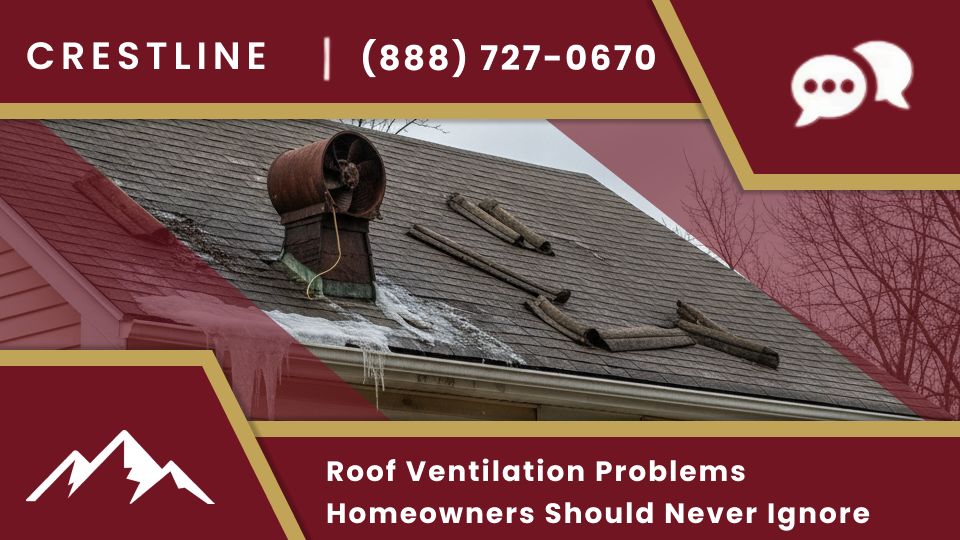
When ventilation fails, heat and moisture become trapped inside the attic. This creates an environment that accelerates material breakdown throughout the roofing system.
Long-term effects include:
- Shingles curling, cracking, or aging prematurely
- Roof decking weakening due to prolonged moisture exposure
- Increased risk of mold growth on wood surfaces
- Insulation becoming compressed or water-damaged
- Nails and fasteners loosening from thermal expansion
Over time, this damage can reduce the functional lifespan of a roof by several years, leading to repairs that could have been avoided with earlier correction.
When Roof Ventilation Problems Become Structural Risks
Persistent attic moisture buildup doesn’t stay confined to insulation. Moisture gradually migrates into rafters, trusses, and roof decking. As wood absorbs moisture repeatedly, it begins to rot and lose strength.
At the same time, excessive attic heat causes materials to expand and contract more aggressively, stressing fasteners and joints. Once these issues reach structural components, repair costs increase significantly and may require partial roof replacement rather than simple adjustments.
Why DIY Ventilation Fixes Often Make Things Worse
Roof ventilation systems must remain balanced or else there is problems like rising energy bills, hot attic, and moisture buildup in attic. Intake and exhaust airflow must work together, not against each other. Adding vents without calculating airflow ratios can trap moisture instead of releasing it.
DIY mistakes often include:
- Adding exhaust vents without increasing intake
- Blocking soffit vents unintentionally
- Installing incompatible vent types together
- Disrupting airflow paths inside the attic
Improper modifications can also void roofing warranties and create new moisture problems that didn’t exist before.
How Professional Evaluation Solves the Root Problem
Professional roofing evaluations focus on the entire ventilation system—not just visible vents. Technicians assess intake-to-exhaust balance, attic airflow patterns, insulation placement, and moisture levels.
By correcting airflow at the system level, professionals restore proper ventilation without creating secondary issues. This approach protects roofing materials, improves energy efficiency, and stabilizes attic conditions year-round.
Preventing Future Ventilation-Related Damage
Routine roof evaluations help catch airflow issues early like roof ventilation problems. Small adjustments—such as clearing blocked vents or improving intake—can prevent years of hidden damage.
Homeowners benefit from:
- Longer roof lifespan
- More stable indoor temperatures
- Reduced energy strain on HVAC systems
- Lower risk of moisture-related repairs
Ventilation maintenance is one of the most cost-effective ways to protect a roofing system.
Professional Roofing Support From Crestline Home
Crestline Home provides professional roofing evaluations designed to identify ventilation issues before they cause structural damage. If you’re experiencing signs of poor airflow or suspect roof ventilation problems near you, a qualified roofing professional can determine the safest and most effective solution to protect your home long-term.
Why Early Action Protects Your Home Long Term
Roof ventilation problems rarely correct themselves. Left unresolved, they continue placing hidden strain on your roof system every day—especially during warmer months when attic temperatures peak. What begins as uneven airflow can quietly escalate into moisture saturation, insulation failure, and structural weakening that homeowners only discover once visible damage appears.
Addressing ventilation concerns early allows corrective work to remain targeted and cost-effective. Simple airflow adjustments and vent corrections can prevent the need for premature roof replacement, interior repairs, or mold remediation. More importantly, proper ventilation restores balance to the entire roofing system, helping every component perform as designed.
Homeowners often focus on shingles and surface damage, but attic conditions play a larger role in roof longevity than most realize. Heat buildup and moisture accumulation are among the leading contributors to early roof failure, even on newer installations. Correcting airflow issues protects both the roof above and the living space below.
If your home shows signs of attic heat retention, rising energy bills, moisture buildup, or inconsistent indoor comfort, professional evaluation provides clarity and peace of mind. Identifying the cause early prevents unnecessary damage and helps preserve your investment.
Crestline Home offers experienced roofing evaluations that focus on long-term system health—not just visible symptoms. When roof ventilation problems near you are addressed correctly, homeowners gain lasting protection, improved efficiency, and confidence in their roof’s performance for years to come.
Phone: (888) 727-0670
Email: info@crestln.com
Website: https://www.crestln.com/
